 A Genetic Great
A Genetic Great
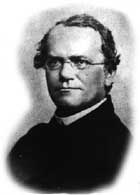
A Genetic Great Gregor Mendel is best known for his work with pea plants. What must be remembered is that he pioneered this, as what he was achieving was unprecedented at the time. "Experiments with Plant Hybrids," is the document which explains how characteristics can be passed on from generation to generation. Even though it was written in 1866, it is still widely known and studied (as can be seen from the fact that we were given this project!). The reason that Mendel was not viewed as highly while alive as he is now, is because his work was to revolutionary to be understood. Therefore, it took over 30 years before it was understood, a little late to personally recognise him, as by that stage he had well and truly passed away.
He invented the terms, dominant and recessive traits and
made defined them in the following way:
Dominant trait : the trait that resembles the parent.
Recessive trait : the alternative trait which is
not expressed.
There was, however, an element of luck in his findings. The main intention of the test was to try and support Larmack's view that characteristics were determined by their environment. He found this not to be true, instead making a far more revolutionary discovery.
From these studies he created some basic laws of the theory of heredity:
We have a large amount to thank Mendel for, because now we are able to recognise herditary diseases and take measures to prevent them in individuals.
Some major herediary illnesses include:
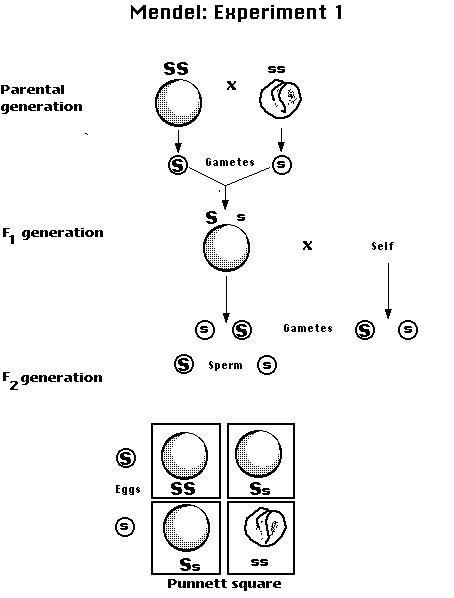
Here is an example of one of his findings, which is now commonplace in basic genteics study in schools:
It is true that there are ways that Mendel's findings
can be used negatively, but I believe there is so much more to gain from
such a revolutionary theory. He died in 1884, leaving behind a legacy which
is still being explored.

| Upbringing and Beginnings | Tributes to Mendel |
| Back to Homepage |  |